
The Scarlet Macaw:
Loyalty in the Rainforest
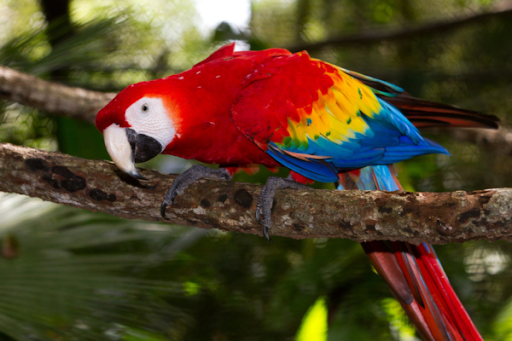
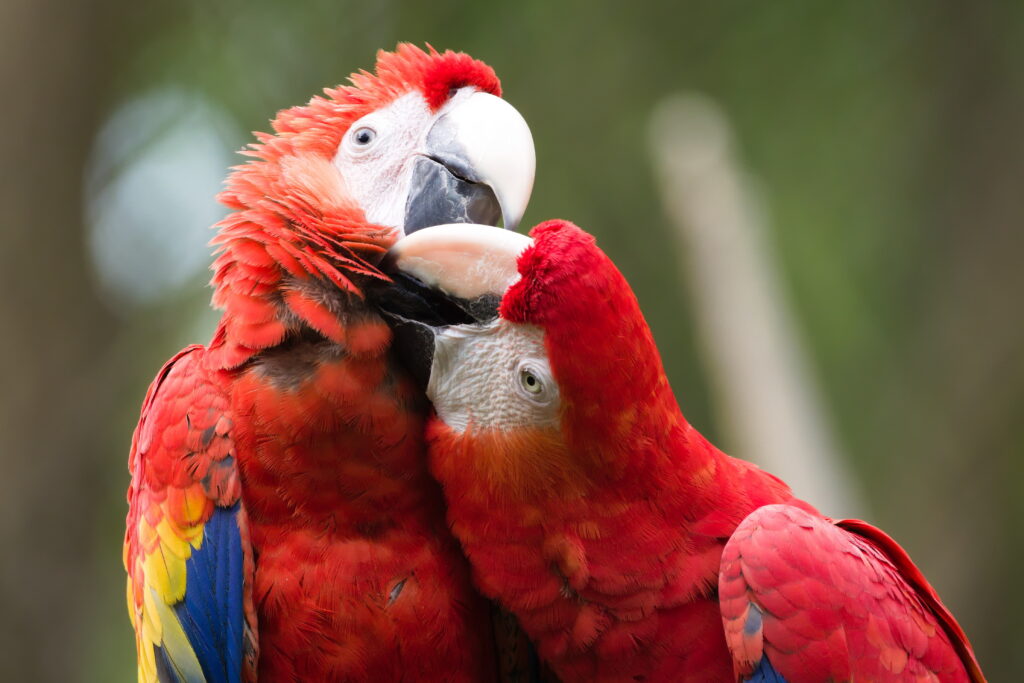
The Scarlet Macaw is one of the most recognizable birds in the world — brilliant red plumage accented by bands of yellow and blue, wings stretching nearly four feet across. Native to Central and South America, these large parrots thrive in tropical forests where tall trees provide nesting cavities and abundant food sources.
In Belize, the Scarlet Macaw is more than a striking sight against the canopy. It is also a symbol of enduring partnership.
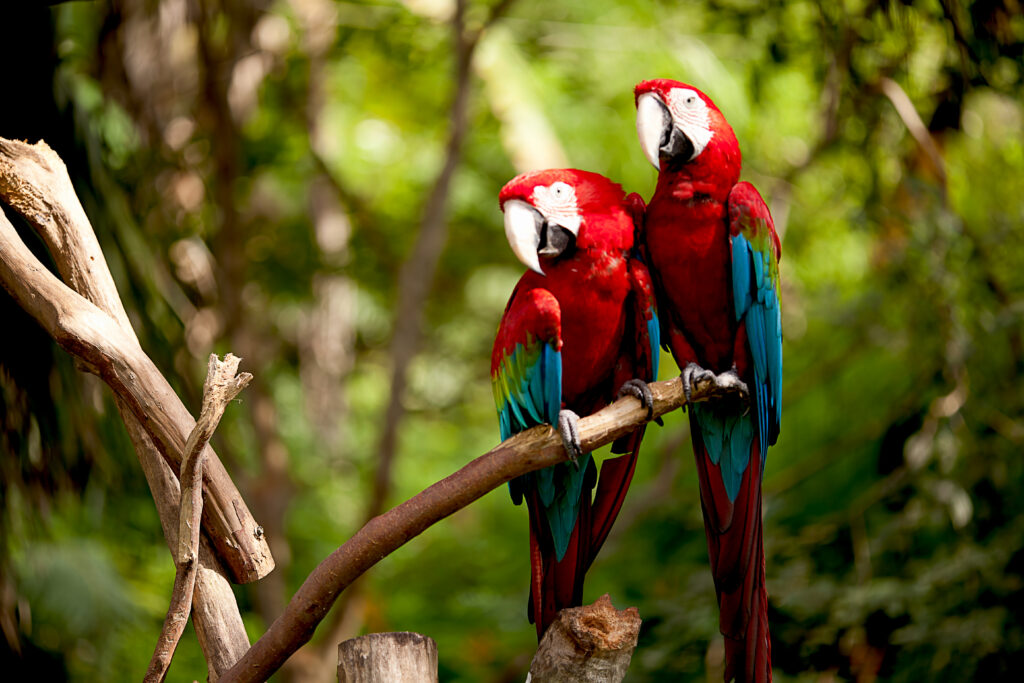
Scarlet Macaws are known for strong, lifelong pair bonds. Once a male and female form a partnership, they typically remain together for life — a commitment that can span 40 to 50 years in the wild. They raise their young cooperatively, share food, and maintain constant communication through calls and body language. Mutual preening strengthens their bond and reinforces trust.
Their loyalty is practical as well as symbolic. In the wild, cooperation increases survival. Pairs defend nesting sites together and rely on one another to rear chicks, which may stay with their parents for more than a year before becoming independent.
Scarlet Macaws are highly intelligent birds, capable of problem-solving and complex social behavior. Their powerful curved beaks allow them to crack open hard nuts and seeds, giving them access to food sources unavailable to many other species. Their diet typically includes fruits, nuts, seeds, and occasionally clay from riverbanks, which helps neutralize toxins from unripe fruit.
Ecologically, they play an important role in forest regeneration. By consuming fruit and dispersing seeds across wide areas, they contribute to maintaining biodiversity within the rainforest.
However, Scarlet Macaw populations have faced pressure from habitat loss and illegal wildlife trade. Deforestation reduces available nesting trees, which are often large, mature hardwoods. In Belize, conservation programs and protected forest reserves are critical to preserving both habitat and breeding grounds.
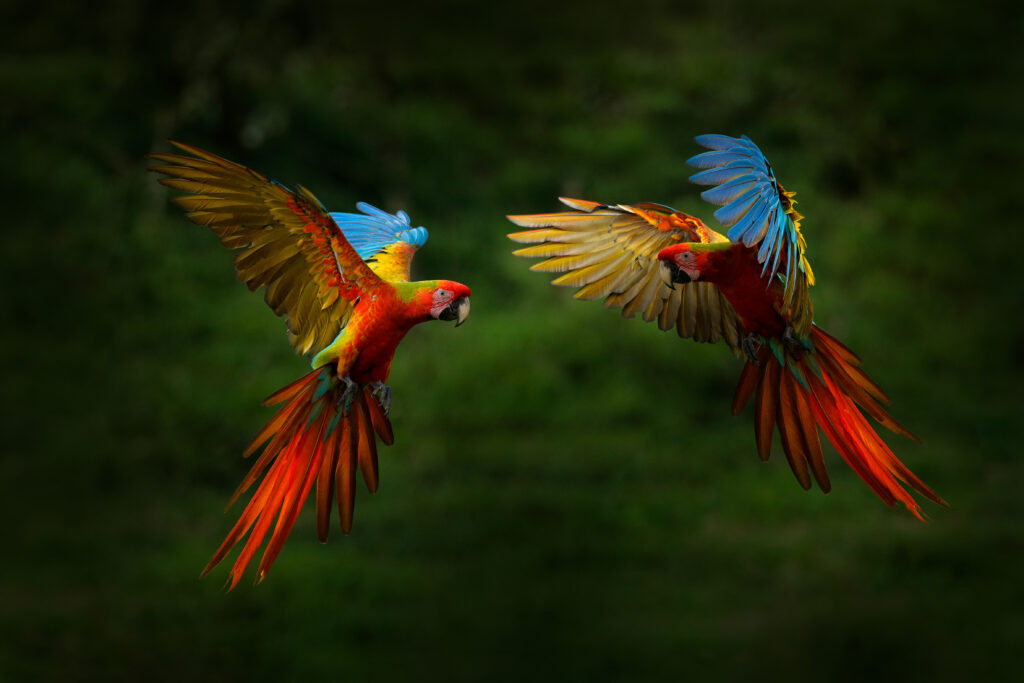
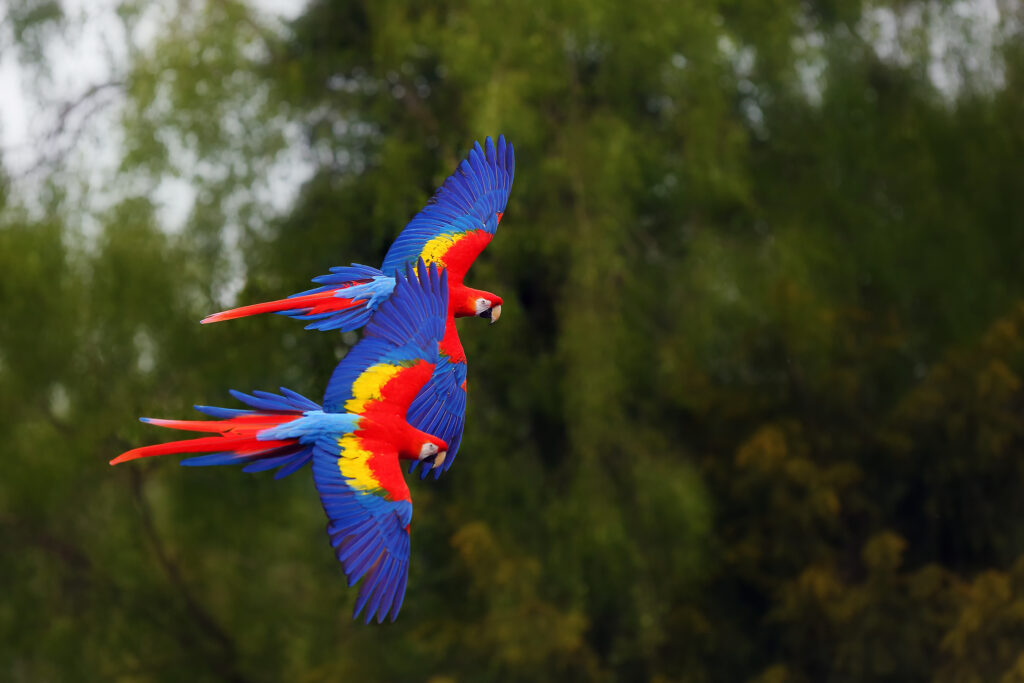
To see a pair of Scarlet Macaws flying together over the rainforest is to witness both beauty and resilience. Their vibrant coloration may draw the eye, but their partnership is what defines them.
February often focuses on expressions of love that are fleeting or decorative. The Scarlet Macaw offers a different model — one built on time, cooperation, and shared environment.
In the rainforest, survival depends on balance and interdependence. The macaw pair reflects that principle: bold, visible, and deeply committed.
Their presence is a reminder that some bonds are not seasonal. They are lifelong — shaped by trust, strengthened by partnership, and sustained year after year beneath the canopy.

Maya Cacao Old Fashioned
This February, we’re reaching for a Maya Cacao Old Fashioned—a slow, intentional cocktail that leans into warmth, depth, and a little indulgence. Rich chocolate notes meet gentle spice, anchored by a classic Old Fashioned backbone that feels familiar yet elevated. It’s the kind of drink made for winter nights when the lights are low, conversations linger, and there’s nowhere else you need to be. Each sip invites you to pause, breathe, and savor the moment rather than rush past it.
Rooted in cacao’s long, storied history, this cocktail feels both timeless and grounding—comforting without being sweet, bold without overpowering. Simple, balanced, and deeply satisfying, it’s a reminder that sometimes the best luxury is slowing down.